The coat of arms of Abbiategrasso: six centuries of the lion's history
Abbiategrasso, 15 October 2026
A symbol tied to the town's autonomy
According to the account given in «Storia di Abbiategrasso» by A. Palestra, the origins of the civic emblem date back to the 15th century, and perhaps even to the century before.
Although it never exercised feudal jurisdiction, the town of Abbiategrasso obtained judicial power for civil cases in 1373 and for criminal cases in 1457.
The exercise of these powers may therefore have encouraged the adoption of a sign capable of officially representing the town. The coat of arms expressed the collective identity, an emblem of the community.
Saint Peter and the rampant lion
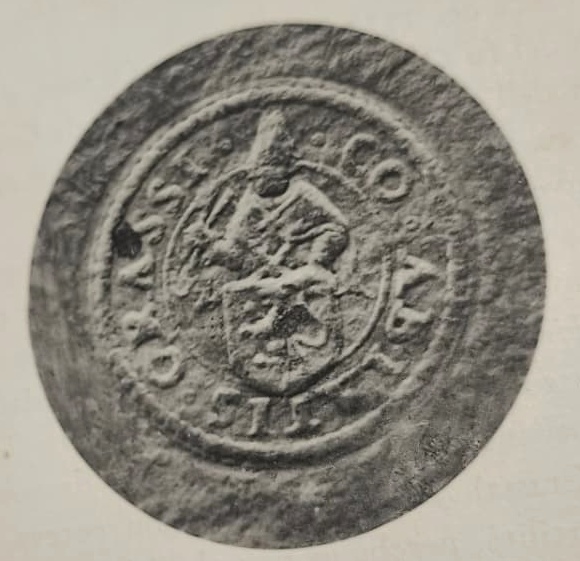
But the oldest evidence mentioned in the account is an embossed seal stamped on 15th-century paper documents. It shows Saint Peter, the ancient patron of the Abbiategrasso community, holding a shield with the rampant lion.
It is an image that joins the religious dimension with the civic one: the saint holds up the symbol through which the community recognises and presents itself.
The oldest colour reproduction is a papal bull of 1544 showing a red lion on a silver field. The document is linked to the aggregation of the Abbiategrasso Confraternity of the Most Holy Sacrament to the Roman Archconfraternity of the same name.
The «Royal» community of Abbiategrasso
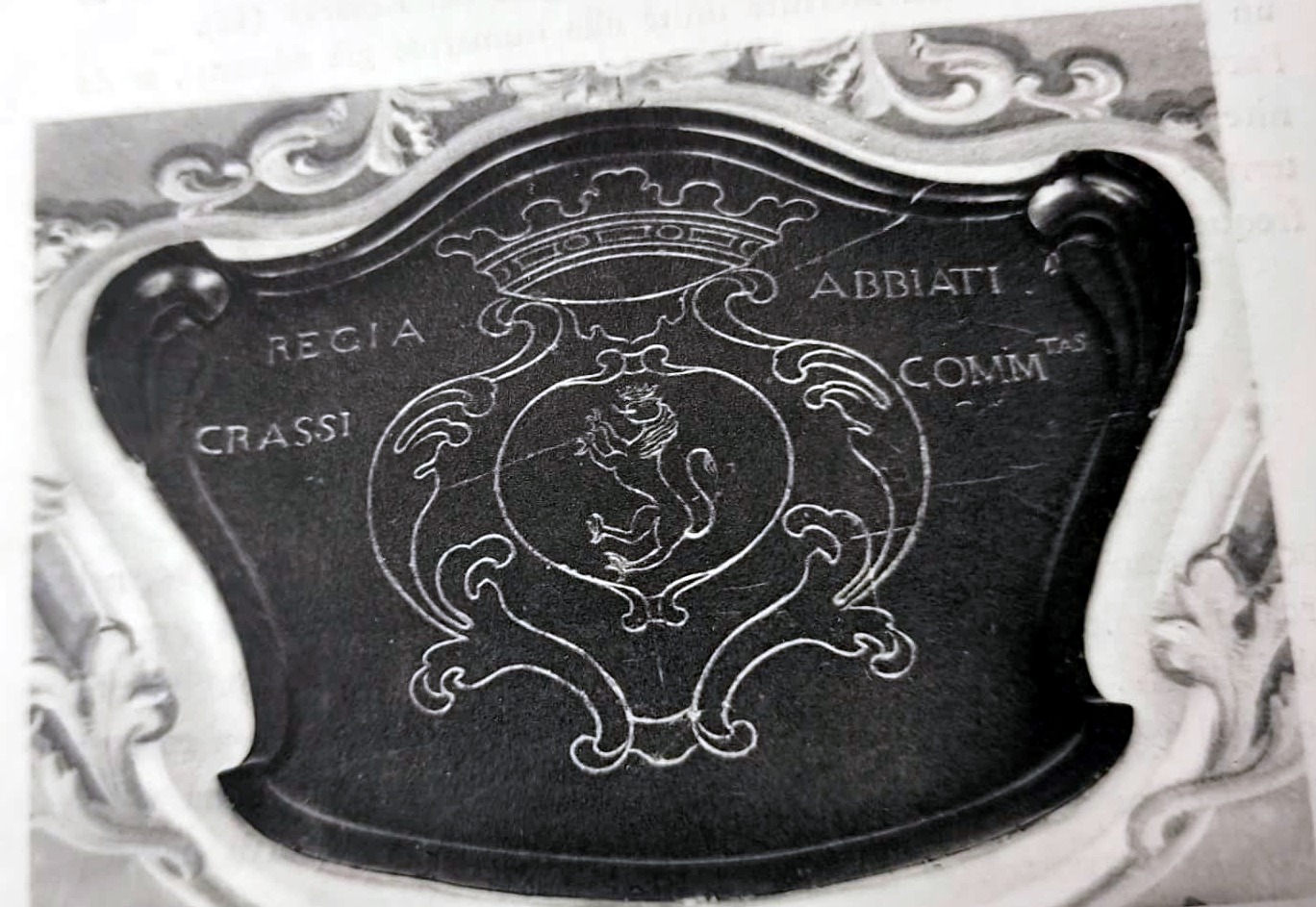
Another piece of evidence is the 17th-century black marble plaque that the source describes as set into the wall of a room in the town hall. There the lion appears surmounted by a crown, together with the inscription:
REGIA ABBIATI GRASSI COMUNITAS
The wording recalled the town's status as a «royal» community: directly dependent on the Spanish crown and not granted as a fief. The coat of arms, too, told the story of the relationship between Abbiategrasso and sovereign power.
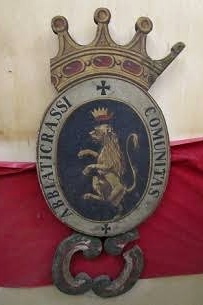
The Milanese collections of coats of arms from the 17th and 18th centuries, according to the source, preserve the oldest colour combination: the red lion on a silver background.
A ministerial decree of 1930 changed the tinctures of the coat of arms and placed a gold crown «all'antica» above the lion. The colours in use today derive from that decision: the gold lion on a blue field.
The modern coat of arms: the crown, the laurel and the oak
In the contemporary version, the shield is accompanied by the mural crown with five visible towers, reserved for bodies granted the title of City. For Abbiategrasso the historical reference is the Royal Decree of 31 March 1932, which conferred that title: a date concerning the recognition of the city, not necessarily the introduction of all the ornaments of the present coat of arms.
Alongside the turreted crown, two plant elements characterise the coat of arms: laurel and oak, recurring in Italian civic heraldry. Laurel recalls victory and glory, following a tradition going back to ancient Rome; oak represents strength and courage.
The branches of the two plants are tied together by a tricolour ribbon, recalling the colours of the Italian flag. Crown, foliage and ribbon thus complete the historic lion, joining the identity of the Abbiategrasso community to the tradition of Italian civic emblems.
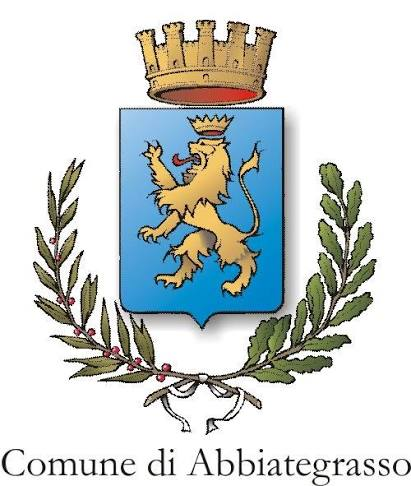
The current municipal statute states:
Sources:
«Storia di Abbiategrasso», A. Palestra. «Storia e monumenti abbiatensi», A. Rossi.
Share